Cloud Kitchen is Reducing Waste
The food industry faces a massive sustainability challenge, and the rise of delivery-focused cloud kitchens adds a new layer of complexity, particularly when it comes to packaging. At Eat House, we believe that convenience shouldn’t come at the cost of the planet. By optimizing our operations away from the traditional dining room model, we’ve gained a unique advantage: the ability to focus our innovation and investment purely on sustainable practices in three key areas: packaging, ingredient sourcing, and food waste reduction.
1. Packaging: Ditching Plastic for a Planet-Friendly Finish
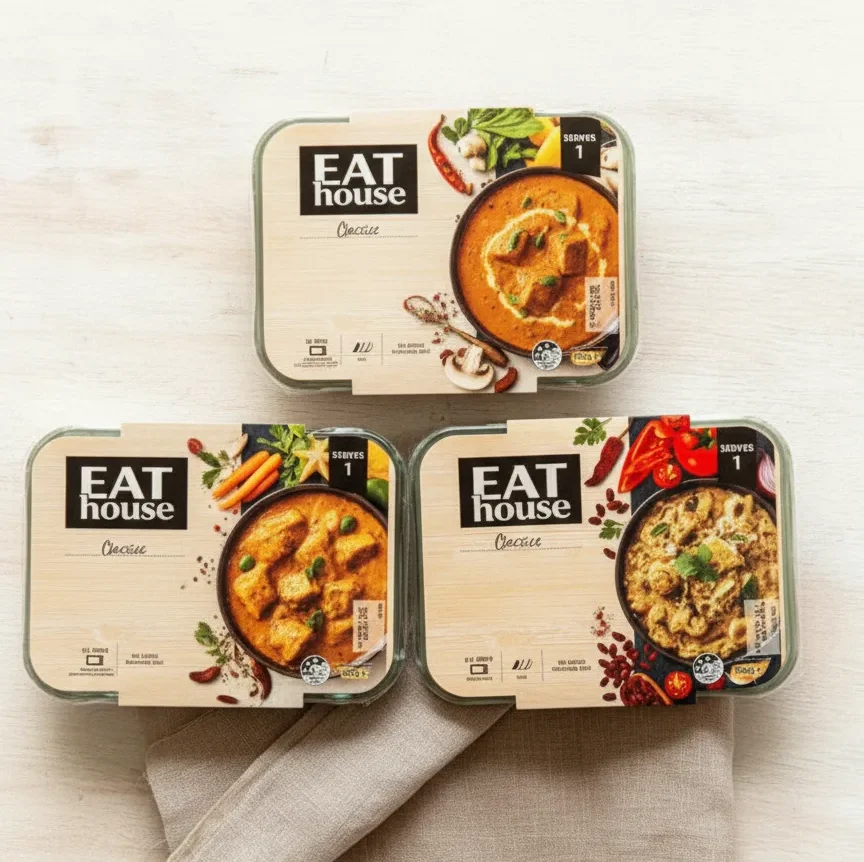
The sheer volume of single-use containers in the delivery world is daunting. We’ve made a firm commitment to eliminating as much conventional plastic as possible without compromising food quality or safety, and keeping in mind the sustainability.
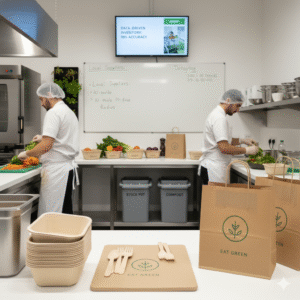
- Compostable Containers: All of our main meal containers, including bowls and lids, are made from bagasse (a sugarcane byproduct) or plant-based PLA. These materials are certified compostable, meaning they break down in commercial facilities without leaving harmful microplastics.
- Recycled Paper & Cardboard: For our cutlery, napkins, and outer carry bags, we exclusively use materials made from 100% recycled content. Our bags are unbleached and designed to be easily recycled again by the end-user.
- Minimalist Design: We have streamlined our packaging to use the minimum number of components necessary. For instance, we use clever container designs that allow sauces to be separated from dry ingredients without needing extra plastic inserts, reducing the total material used per order.
2. Ingredient Sourcing: From Farm to Fork, Responsibly
A cloud kitchen’s focus on quality ingredients often translates directly into better sourcing practices, as we don’t have to allocate budget to high-end real estate.
- Local and Seasonal First: We prioritize partnerships with local farms and regional suppliers within a 100-mile radius for fruits, vegetables, and dairy. This significantly reduces our food miles—the distance our ingredients travel—which lowers our carbon footprint and ensures maximum freshness and sustainability.
- Waste-Stream Utilization: Our chefs are trained to value the entire ingredient. For instance, vegetable trimmings and scraps are routinely repurposed. Onion peels and carrot tops might become the base for a rich, flavorful vegetable stock, minimizing biological waste.
- Ethical Supply Chains: For items we cannot source locally (like certain spices), we work only with suppliers who provide clear documentation on fair trade practices and sustainablility in harvesting, ensuring our choices support both the environment and global communities.
3. Food Waste Reduction: The Power of Predictable Demand
Food waste is an enormous economic and environmental drain on the restaurant industry, which affects sustainability. Our delivery-only model gives us a critical data advantage in fighting it.
- Data-Driven Inventory: Unlike traditional restaurants, which must prep for unpredictable walk-in traffic, our operations are 100% digital. We use advanced software to analyze order trends and predict demand with high accuracy. This allows us to order and prep ingredients in highly controlled batches, drastically reducing the chance of spoilage.
- Batch Cooking and Zero-Waste Recipes: Our menu is designed around flexible ingredients that can be quickly repurposed. If demand for a particular item dips, its components can pivot to a secondary, equally delicious dish on a different virtual menu, effectively creating a “zero-inventory” mindset.
- Composting Program: Any unavoidable organic waste (like coffee grounds or eggshells) is collected and sent to a local commercial composting facility, keeping it out of the landfill where it would otherwise release harmful methane gas.
By dedicating our energy to these three core areas—smart packaging, responsible sourcing, and data-driven efficiency—we are proving that the future of convenient, quality food delivery can be genuinely sustainable. We’re not just serving great food; we’re serving a better and sustainable planet.